Paint-Ready Walls and Ceilings With Professional Finish
Interior Wall Finishing & Ceiling Repair in Collinsville for taping, mudding, and sanding that produces smooth, visually consistent surfaces ready for final coats
Legacy Plastering completes interior wall finishing and ceiling repair in Collinsville when new drywall installations, ceiling cracks, or sagging sections need taping, mudding, and sanding to achieve smooth, paint-ready surfaces. You schedule this service during remodels, after structural repairs, or when cosmetic ceiling damage such as cracks and texture separation detracts from the overall appearance of interior spaces. The work produces clean lines, flat planes, and uniform surfaces that accept primer and paint without visible seams, ridges, or tool marks.
Wall finishing begins with embedding paper or fiberglass mesh tape over drywall seams, followed by successive coats of joint compound applied with taping knives in widening passes to feather edges and eliminate transitions between panels. Ceiling repairs address cracks caused by settling, sagging from water exposure or age, and cosmetic flaws that disrupt the visual flow of the room. Each coat is allowed to dry fully before sanding to remove high spots, and additional coats are applied until the surface reaches the desired level of smoothness based on the finish type planned.
If you need walls and ceilings finished to professional standards in Collinsville, contact Legacy Plastering to assess the scope and schedule taping, mudding, and sanding work.
Taping, Mudding, and Sanding for Smooth, Consistent Surfaces
You begin by applying a thin layer of joint compound along drywall seams, pressing tape into the wet compound, and smoothing it with a taping knife to remove air bubbles and ensure full adhesion. A second coat is applied once the base layer dries, using a wider knife to extend the compound beyond the tape edges and feather the transition into surrounding drywall. Ceiling repairs follow a similar process, with cracks cleaned and filled, sagging sections resecured to framing, and damaged areas rebuilt using backing material and compound to restore a level plane.
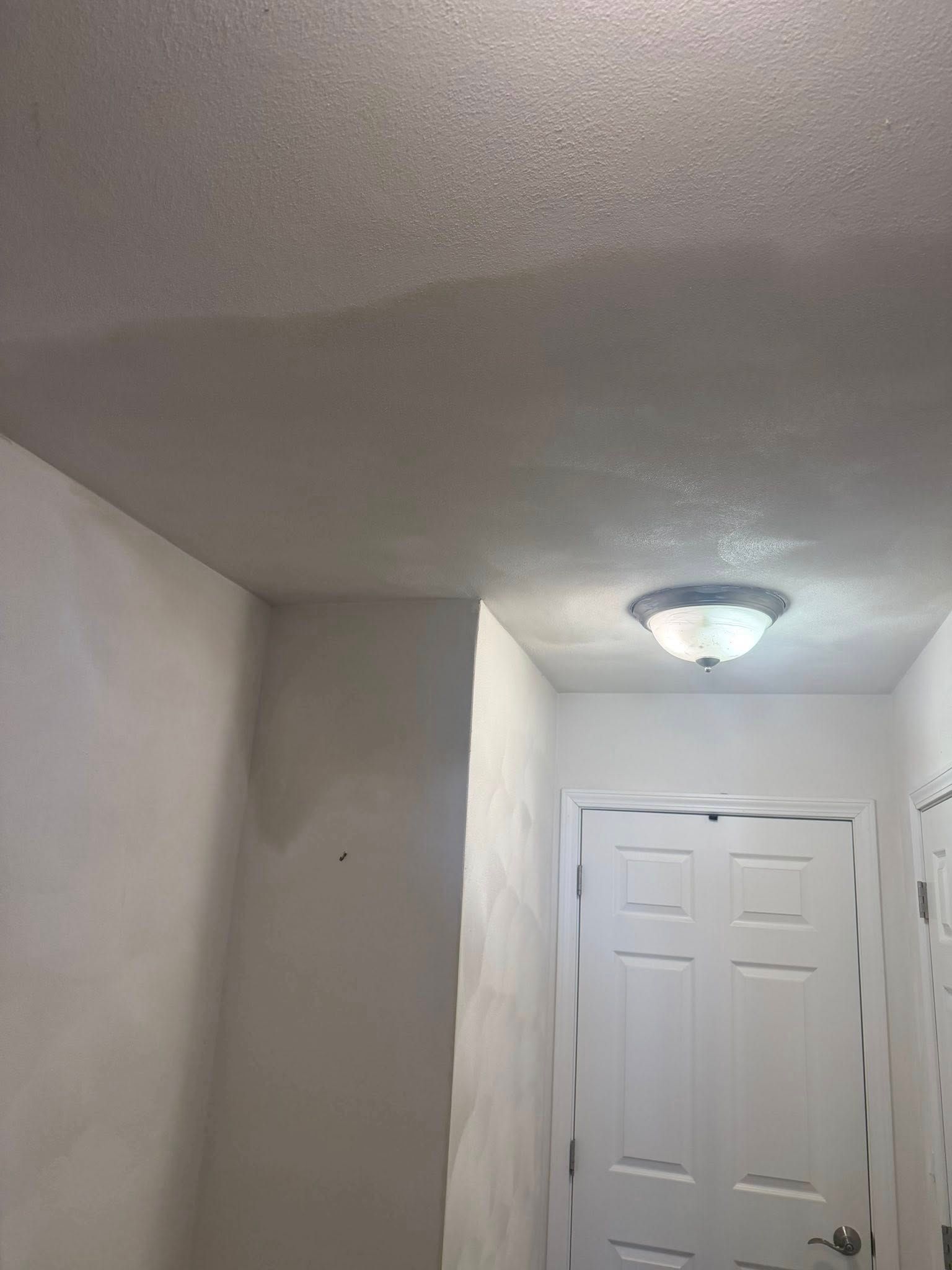
After finishing is complete, walls and ceilings feel smooth with no detectable seams, fastener dimples, or texture changes when you run your hand across the surface. Legacy Plastering sands finished surfaces using fine-grit paper or sanding screens to eliminate ridges and tool marks, then primes the walls so paint adheres evenly and the final appearance is consistent across the entire room. You notice clean transitions at corners, flat expanses free of waves or humps, and a professional-grade finish that ties together the overall look of the space.
The service includes taping drywall joints, applying multiple coats of joint compound, sanding to smooth finishes, and repairing ceiling cracks and cosmetic damage. Texturing, priming, and painting are separate steps that follow once the surfaces are fully finished and cured, and the scope covers both new installations and repair projects across residential and light commercial spaces.
What to Expect During Wall Finishing and Ceiling Repair
Homeowners in Collinsville often ask about the number of coats needed, drying times, and how to avoid common finishing problems.
How many coats of joint compound are required?
Most drywall seams require three coats: a tape coat to embed the tape, a second coat to build width and hide edges, and a finish coat to smooth and feather the transition, with sanding between each layer.
What causes ceiling cracks to reappear after repair?
Cracks caused by ongoing structural movement, insufficient fastening to ceiling joists, or failure to use mesh reinforcement over the crack will reopen unless the underlying cause is addressed before finishing.
How long should I wait between coats?
Lightweight joint compound typically dries in four to six hours, but thicker applications or high-humidity conditions in Collinsville may require overnight drying to prevent sanding issues and ensure proper adhesion of subsequent coats.
Why do seams sometimes show through paint?
Insufficient feathering, skipped sanding steps, or failure to prime finished surfaces cause seams to telegraph through paint, which is why each coat must be applied wider than the previous one and sanded smooth before priming.
When is skim coating necessary?
Skim coating covers the entire wall or ceiling with a thin layer of compound to hide surface imperfections, texture inconsistencies, or old repairs, and is recommended when multiple localized fixes would be more visible than a uniform finish.
If you need interior walls and ceilings finished or repaired in Collinsville with attention to smooth, consistent results, reach out to Legacy Plastering to review the project and begin the finishing process.